Flaming Flit: India's Trailblazing Fantasy Action RPG Experience
Flaming Flit has emerged as one of India's most ambitious gaming projects to date, masterfully weaving together ancient Indian mythology with cutting-edge gameplay mechanics that have captured the imagination of gamers across the subcontinent and beyond. Developed by Daman Games – the Bangalore-based studio renowned for their cultural authenticity – Flaming Flit represents a quantum leap forward for Indian game development, proving that locally-made titles can compete with international AAA productions while retaining their distinct cultural identity.
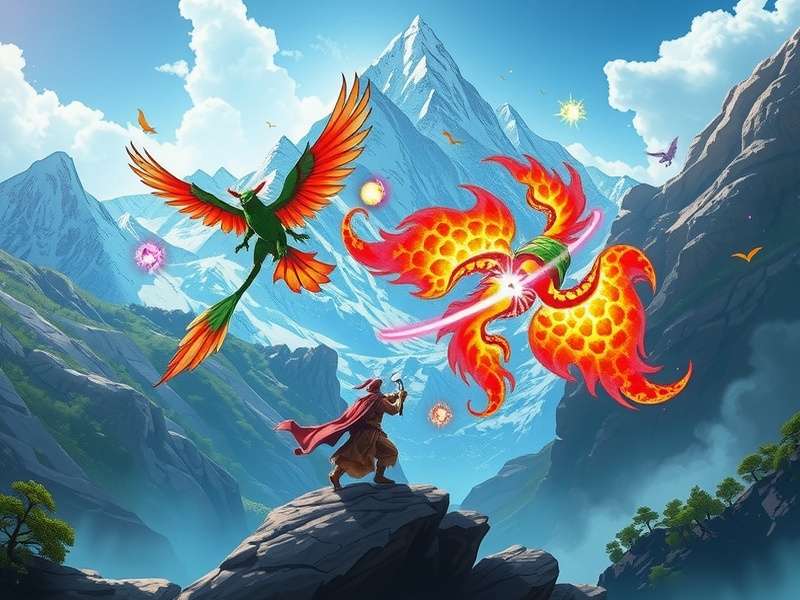
Flaming Flit's revolutionary elemental combat system in action amidst the snow-capped Himalayan peaks
What truly sets Flaming Flit apart from other fantasy RPGs is its deep integration of Vedic and Puranic mythology with innovative gameplay that feels both familiar and refreshingly original. Unlike many games that merely use Indian aesthetics as superficial decoration, Flaming Flit builds its entire world, characters, and mechanics around authentic Indian philosophical concepts like the Pancha Bhutas (five elements) and the Trimurti (trinity), creating an experience that resonates deeply with Indian players while remaining accessible to global audiences.
In a gaming landscape often dominated by Western fantasy tropes, Flaming Flit proudly showcases India's rich mythological traditions, from the celestial Apsaras to the fearsome Rakshasas, from the wise Rishis to the powerful Asuras. The game's developers have worked closely with Sanskrit scholars and mythology experts to ensure that every aspect of the game – from character abilities to environmental design – stays true to the source material while adapting it for contemporary gaming sensibilities.
Quick Facts about Flaming Flit ⚡
- Release Date: 15th August 2024 (India's Independence Day)
- Platforms: PC, PlayStation 5, Xbox Series X/S, Nintendo Switch, Mobile (iOS & Android)
- Developer: Daman Games
- Genre: Fantasy Action Role-Playing Game (Action RPG), Mythological Adventure
- Setting: Alternate ancient India during the Treta Yuga, blending historical sites with mythological realms
- Player Count: Single-player with cooperative multiplayer and PvP arena modes
Gameplay Mechanics in Flaming Flit
Flaming Flit introduces a revolutionary gameplay system built around the five classical elements of Indian philosophy – Prithvi (Earth), Apas (Water), Agni (Fire), Vayu (Air), and Akasha (Ether/Space). This elemental system forms the backbone of both combat and exploration, creating a deeply interconnected gameplay experience that rewards strategic thinking and creative problem-solving.
Elemental Combat System
The combat in Flaming Flit represents a significant evolution in action RPG mechanics, drawing inspiration from classics like God of War and Devil May Cry while infusing them with distinctly Indian philosophical concepts. Players control the protagonist, a young elemental warrior known as a "Flit," who can channel and manipulate the five elements to devastating effect against enemies ranging from demonic Rakshasas to celestial Gandharvas.
Each element in Flaming Flit offers unique combat capabilities and strategic advantages:
- Agni (Fire): The primary element from which the game derives its name, Agni allows players to unleash devastating fire-based attacks, ignite environmental objects, and melt obstacles. Special abilities include Agni Astra (fire missile) and Jwala Chakra (flaming discus)
- Vayu (Air): Grants exceptional mobility and speed, allowing players to dash through enemies, create powerful gusts of wind, and even briefly levitate. Key abilities include Vayu Gati (wind speed) and Pravaha Shakti (tornado force)
- Apas (Water): Provides defensive capabilities, healing properties, and crowd control through freezing effects. Notable skills include Jala Kavacha (water shield) and Sheeta Patra (ice shards)
- Prithvi (Earth): Offers brute strength and terrain manipulation, allowing players to summon stone barriers, create earthquakes, and hurl boulders. Signature moves include Prithvi Garud (earth golem) and Bhumi Shakti (earth power)
- Akasha (Ether): The most mysterious and powerful element, granting control over space and consciousness. Advanced techniques include Akasha Darshan (teleportation) and Chidabhasa (illusion creation)
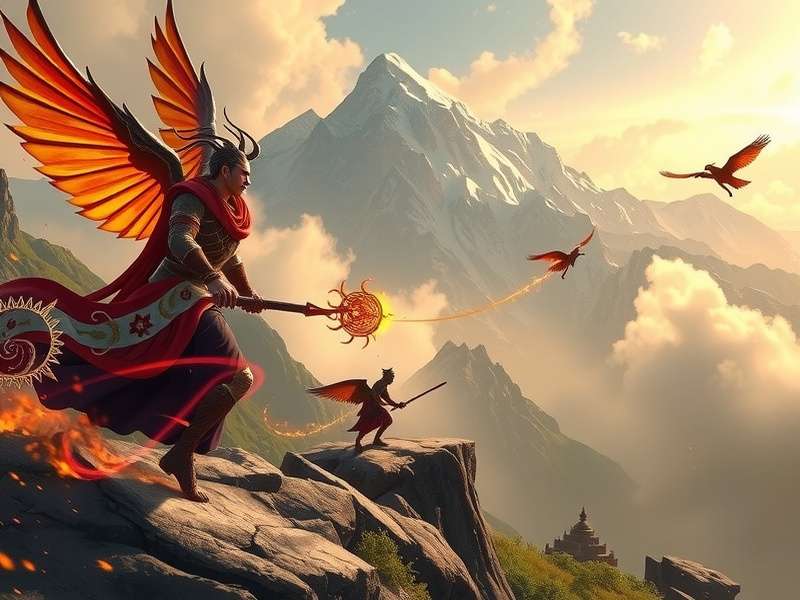
Flaming Flit's innovative elemental combat system showcasing the five classical elements of Indian philosophy
What makes Flaming Flit's combat truly innovative is the ability to combine elements for devastating combo attacks. For example, mixing Agni and Vayu creates a firestorm that engulfs multiple enemies, while combining Apas and Prithvi generates a petrifying mudslide that turns foes to stone. These combinations are not just flashy – they're essential for overcoming the game's toughest challenges, requiring players to think strategically about which elements to deploy in different situations.
Open World Exploration
Flaming Flit features a vast open world inspired by ancient India, stretching from the snow-capped Himalayan peaks in the north to the tropical jungles of the south, from the arid deserts of the west to the lush Gangetic plains of the east. The game world is divided into several distinct regions, each with its own unique environments, challenges, and cultural influences:
- Himalayan Peaks: Snow-covered mountains home to ancient sages, hidden ashrams, and powerful yeti-like creatures known as Mahabalas
- Gangetic Plains: Fertile river valleys dotted with ancient cities, bustling market towns, and sacred pilgrimage sites
- Deccan Plateau: Rugged highlands featuring ancient rock-cut temples, volcanic landscapes, and nomadic warrior tribes
- Western Ghats: Lush mountain ranges with dense forests, cascading waterfalls, and hidden elemental shrines
- Coastal Kingdoms: Maritime regions with bustling ports, coral reefs, and mythical sea creatures from Hindu mythology
- Lost Kingdoms: Ruined civilizations buried beneath deserts or hidden in remote valleys, filled with ancient treasures and dangerous guardians
- Astral Realms: Mythical dimensions beyond the mortal world, including celestial cities and demonic realms
Exploration in Flaming Flit is rewarded through both narrative and gameplay benefits. Players who venture off the beaten path might discover hidden ashrams where ancient sages teach powerful new elemental techniques, stumble upon forgotten temples containing rare artifacts, or encounter mythical creatures that offer valuable quests or challenges.
The game's day-night cycle and dynamic weather system further enhance the immersive experience, with certain events and enemies only appearing during specific times or weather conditions. For instance, celestial spirits might only manifest during full moons, while powerful storm elementals appear during thunderstorms, offering players unique opportunities to acquire rare abilities or items.
Character Progression and Customization
Flaming Flit employs a unique progression system inspired by the Indian concept of gunas (qualities) and yogas (unions). Rather than traditional RPG classes, players develop their character along three primary paths:
- Sattva: The path of wisdom and balance, focusing on elemental harmony and defensive capabilities
- Rajas: The path of passion and action, emphasizing offensive power and elemental mastery
- Tamas: The path of darkness and transformation, unlocking forbidden techniques and primal powers
As players progress through Flaming Flit, they earn Prana points that can be invested in these three paths, allowing for highly customizable character builds. A player might choose to specialize in a single path for focused power or balance multiple paths for versatility, creating unique playstyles that reflect their personal preferences.
The game also features an extensive crafting system based on ancient Indian knowledge systems like Ayurveda and Vastu Shastra. Players can gather herbs, minerals, and mystical components to create:
- Ayurvedic Elixirs: Potions that enhance elemental abilities or provide temporary resistance to certain damage types
- Mantric Inscriptions: Enchantments that can be applied to weapons and armor to grant elemental properties
- Yantric Devices: Mechanical contraptions inspired by ancient Indian engineering that can manipulate the environment
- Tantric Talismans: Sacred objects that provide passive bonuses and protection against specific threats
- Ritual Offerings: Items used to appease powerful deities and gain their favor in the form of blessings
Character customization extends beyond abilities and equipment to include cosmetic options inspired by traditional Indian attire and adornments. Players can choose from a variety of dhoti and saree styles, apply intricate mehndi designs, and adorn their characters with mangalsutra necklaces, bindi forehead decorations, and other culturally significant accessories – many of which also provide subtle gameplay benefits.
Narrative and Setting of Flaming Flit
Flaming Flit is set in an alternate version of ancient India during the mythical Treta Yuga, a golden age when gods, demons, and humans coexisted. The game's world draws heavily from the Ramayana, Mahabharata, and various Puranic texts, but presents them through a fresh lens that explores moral complexities often overlooked in traditional retellings.
Main Plot
The story of Flaming Flit begins with the player character – a young villager from the remote Himalayan settlement of Agnigarh – discovering their latent ability to control the element of fire after a devastating attack by demonic forces. This awakening attracts the attention of a mysterious sage named Vishwamitra, who reveals that the protagonist is the last of the Agni Kshatriyas (Fire Warriors), an ancient order tasked with maintaining balance between the mortal and celestial realms.
As the protagonist trains under Vishwamitra to master their abilities, they learn of a growing darkness spreading across the land – a corruption known as the Tamasik Blight that is poisoning the elemental forces and turning both humans and mythical creatures into mindless monsters. The source of this corruption is revealed to be a fallen Asura prince named Bali, who seeks to merge the mortal world with the netherworld of Patala to create a new realm where darkness reigns supreme.
To stop Bali's apocalyptic plan, the protagonist must embark on a journey across ancient India, gathering allies from diverse cultures and kingdoms, awakening the other elemental powers within themselves, and ultimately confronting Bali in a climactic battle that will determine the fate of all realms.
Along the way, players will encounter iconic figures from Indian mythology, including:
- Lord Rama: Not as a divine avatar, but as a wise prince facing difficult moral choices that challenge traditional perceptions of heroism
- Goddess Sita: Reimagined as a powerful earth elemental who chooses her own destiny rather than being a passive figure
- Hanuman: The mighty monkey god who serves as both a mentor and comic relief, aiding the protagonist with his immense power and wisdom
- Shurpanakha: The demoness traditionally portrayed as a villain, here given a more nuanced backstory that explores themes of rejection and revenge
- Valmiki: The sage and author of the Ramayana, who guides players through hidden truths about the nature of storytelling and mythology
Key Characters in Flaming Flit 👥
- Agni/Agneya: The customizable protagonist, last of the Agni Kshatriyas with the power to control fire
- Vishwamitra: The ancient sage who mentors the protagonist and holds secrets about the cosmic balance
- Maya: A mysterious illusionist with the power to manipulate the Akasha element, whose allegiance remains uncertain
- Bharata: A skilled warrior prince from Ayodhya who joins the protagonist's quest after his kingdom is threatened
- Takshaka: A Naga princess (serpent being) who controls water elementals and guards ancient underwater secrets
- Bali: The fallen Asura prince and primary antagonist, corrupted by the Tamasik Blight he seeks to spread
- Arundhati: A celestial astronomer who guides the protagonist through the astral realms and prophesies their destiny
Mythological Depth and Cultural Representation
One of the most remarkable aspects of Flaming Flit is its nuanced portrayal of Indian mythology, which goes beyond surface-level references to explore the philosophical and spiritual depths of the source material. The game's writers have worked closely with Sanskrit scholars and religious experts to ensure that the mythology is represented with both accuracy and respect, while also making it accessible to players unfamiliar with Indian traditions.
The game explores complex philosophical concepts from Hinduism, Buddhism, and Jainism, including:
- Dharma and Adharma: The tension between righteousness and chaos, and how different characters interpret their moral obligations
- Maya: The concept of illusion and how perception shapes reality, reflected in gameplay mechanics involving the Akasha element
- Karma: The law of cause and effect, with player choices having lasting consequences on both the world and the protagonist's development
- Moksha: The ultimate goal of liberation, framed as restoring balance to the elemental forces rather than escaping the cycle of rebirth
- Ahimsa: Non-violence as a philosophical principle, offering players alternative solutions to combat-focused challenges
Flaming Flit also celebrates India's cultural diversity, featuring characters and regions inspired by different parts of the subcontinent. Players will encounter:
- Vedic influences: In the northern regions, with rituals and practices based on the ancient Rigveda and Atharvaveda
- Dravidian traditions: In the southern kingdoms, featuring distinct architectural styles and philosophical perspectives
- Tribal cultures: Among forest-dwelling communities that maintain close connections with nature spirits and primal elements
- Indus Valley motifs: In ancient ruins that hint at India's pre-Vedic civilizations and their relationship with the elements
- Buddhist and Jain influences: In monastic communities that offer alternative paths to power and wisdom
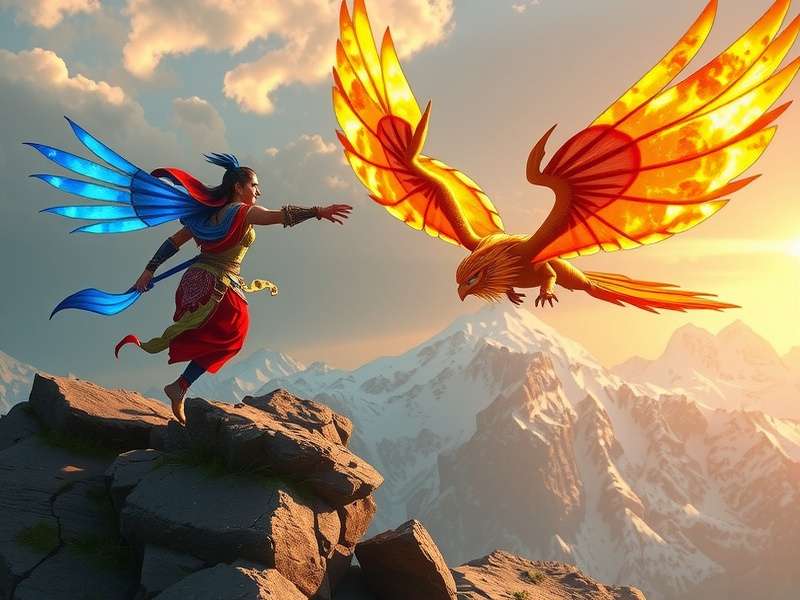
Flaming Flit's richly detailed game world blends authentic ancient Indian landscapes with fantastical mythological realms
The game's soundtrack, composed by Academy Award winner A.R. Rahman in collaboration with traditional Indian musicians, features a blend of classical ragas, folk melodies, and contemporary orchestration. Instruments like the sitar, veena, tabla, mridangam, and shehnai are seamlessly integrated with Western orchestral elements to create a score that feels both timeless and modern – much like the game itself.
Development of Flaming Flit
The development journey of Flaming Flit began in 2020 at Daman Games, following the critical success of their previous title Elemental Guardians. The project was envisioned as a more ambitious follow-up that would push the boundaries of what Indian game development could achieve, both technically and artistically. With a budget of over ₹50 crore (approximately $6 million) – unprecedented for an Indian game – the development team grew to include over 70 members, including mythology experts, cultural consultants, and veteran developers from both Indian and international studios.
Creative Process and Cultural Research
The creative team behind Flaming Flit undertook an extensive research phase that lasted over a year, visiting archaeological sites, studying ancient texts, and consulting with scholars across India. The developers spent months at institutions like Banaras Hindu University, the National Museum in Delhi, and the Oriental Research Institute in Mysore to ensure historical and mythological accuracy in every aspect of the game.
Lead designer Rajesh Menon explained the team's approach in a 2023 interview: "We wanted Flaming Flit to feel authentically Indian, not just in its aesthetics but in its very soul. Too often, Indian culture is portrayed superficially in global media – elephants, curry, and generic 'mysticism.' We wanted to go deeper, to explore the philosophical underpinnings of our mythology and show how they can create compelling gameplay that's truly unique to our cultural perspective."
The elemental combat system, in particular, was developed in collaboration with practitioners of traditional Indian martial arts like Kalaripayattu, Silambam, and Gatka, as well as experts in Ayurveda and yoga. Motion capture sessions recorded authentic martial arts movements and yoga asanas, which were then translated into the game's fluid combat animations.
The game's visual style was inspired by classical Indian art forms, including Mughal miniatures, Rajput paintings, Tanjore art, and Ajanta cave murals. The art team worked with traditional painters and sculptors to develop a visual language that feels both timeless and contemporary, avoiding the Western fantasy tropes that often dominate the RPG genre.
Technical Challenges and Innovations
Creating a game of Flaming Flit's scope presented numerous technical challenges for the development team, who had to overcome limitations in both technology and experience compared to larger international studios. One of the biggest hurdles was developing the game's elemental physics system, which required creating custom algorithms to simulate how the five elements would interact with each other and the environment.
Technical director Anil Kumar described the process: "We wanted the elements to feel alive, not just as special effects but as integral parts of the game world. Fire doesn't just look like fire – it behaves like fire, spreading realistically and reacting to wind and water. This required developing a proprietary physics engine that could handle thousands of dynamic particles while maintaining performance across different platforms."
Another significant challenge was rendering the vast open world of ancient India with historical accuracy and visual splendor. The team used a combination of photogrammetry (3D scanning of real locations) and historical reconstruction to create environments that feel authentic to different regions of ancient India, from the snow-capped Himalayas to the tropical forests of the south.
For the game's artificial intelligence, the developers created a system inspired by the Indian concept of navarasa (nine emotions), giving non-player characters a range of emotional responses that make them feel more human and unpredictable. Enemies also adapt to player strategies, learning from combat encounters and requiring players to constantly vary their approach to battles.
| Development Milestone | Date | Details |
|---|---|---|
| Concept Development | 2020 Q2 | Initial concept and team formation following Elemental Guardians' success |
| Research Phase | 2020 Q3-Q4 | Extensive cultural, historical, and mythological research across India |
| Pre-production | 2021 | Game design, art direction, and core technology development |
| Full Production | 2022-2023 | Main development phase with expanded team and technology implementation |
| Alpha Testing | 2023 Q3 | Internal testing and major gameplay refinements |
| Closed Beta | 2023 Q4 | Limited testing with selected players across India and international markets |
| Launch | August 2024 | Global release across multiple platforms |
| Post-launch Update 1.0 | October 2024 | New Diwali festival content and cooperative multiplayer expansion |
Localization and Accessibility
Flaming Flit was released with support for over 15 languages, including all major Indian languages (Hindi, Bengali, Tamil, Telugu, Kannada, Malayalam, Gujarati, Punjabi, Marathi) as well as English, Spanish, French, German, Chinese, Japanese, and Arabic. This extensive localization effort was seen as crucial for reaching both domestic and international audiences.
The voice acting features prominent Indian actors from both Bollywood and regional film industries, including:
- Amitabh Bachchan: Voicing the ancient sage Vishwamitra
- Deepika Padukone: Voicing the illusionist Maya
- Rajinikanth: Voicing the Naga king Vasuki (Tamil version)
- Mohanlal: Voicing the warrior sage Parashurama (Malayalam version)
- Prabhas: Voicing the protagonist (Telugu version)
The developers also prioritized accessibility features to ensure the game could be enjoyed by players of all abilities:
- Customizable difficulty: Multiple settings ranging from story-focused to "Ascetic" mode for hardcore players
- Control options: Support for multiple control schemes, including simplified controls for players with motor impairments
- Visual accessibility: High-contrast modes, colorblind options, and adjustable text sizes
- Auditory accessibility: Subtitles, visual cues for audio events, and adjustable sound mixing
- Cognitive accessibility: Optional quest trackers, simplified UI options, and adjustable combat pacing
Reception and Impact of Flaming Flit
Since its release on India's Independence Day (15th August) 2024, Flaming Flit has garnered widespread critical acclaim and commercial success, breaking records for an Indian-developed game and earning recognition from both domestic and international gaming publications.
Critical Response
Major gaming publications have praised Flaming Flit for its innovative gameplay, rich storytelling, and cultural authenticity:
- IGN India: Awarded 9.5/10, calling it "a landmark achievement for Indian game development that sets a new standard for cultural representation in gaming"
- GameSpot: Gave 9/10, praising the "deeply integrated elemental combat system that feels both innovative and intuitive"
- PC Gamer: Described it as "a refreshing alternative to Western fantasy RPGs, offering a richly realized world inspired by one of the world's oldest continuous civilizations"
- Gamesradar+: Highlighted the game's "thoughtful approach to mythology that respects its source material while adapting it for interactive storytelling"
- Indian Express Gaming: Called it "the game Indian gamers have been waiting for – one that celebrates our culture without exoticizing it, and competes with the best international titles on every level"
Critics particularly lauded Flaming Flit's elemental combat system, which many compared favorably to the mechanics in games like The Legend of Zelda: Tears of the Kingdom and God of War Ragnarök for its depth and versatility. The game's open world also received praise for its attention to detail and how it integrates Indian geography and mythology into a cohesive and immersive experience.
Some reviewers noted minor technical issues, particularly with the PC version's performance on lower-end hardware, and occasional pacing problems in the game's second act. However, these were generally considered minor flaws in an otherwise exceptional gaming experience.
Commercial Performance
Flaming Flit exceeded all expectations commercially, becoming the fastest-selling Indian game of all time:
- Sold over 250,000 copies worldwide in its first week of release
- Reached #1 on the Steam charts in India and entered the global top 10
- Mobile versions downloaded over 1 million times in the first month
- Grossed over ₹100 crore (approximately $12 million) in its first quarter
- Became the first Indian game to be featured on the front page of the PlayStation Store
The game performed particularly well in India, where it benefited from a major marketing campaign that included partnerships with Bollywood celebrities, cricket stars, and popular YouTube gaming channels. However, it also found an enthusiastic audience in international markets, with strong sales in North America, Europe, and Southeast Asia.
Why Daman Games Recommends Flaming Flit
As pioneers in authentic Indian game development, Daman Games is proud to present Flaming Flit as our most ambitious project to date. Building on the foundations laid by Elemental Guardians, Flaming Flit represents our vision for what Indian gaming can achieve when we draw inspiration from our own rich cultural heritage while embracing cutting-edge game design.
What makes Flaming Flit truly special is how it integrates the philosophical concepts of Indian mythology into every aspect of gameplay, creating an experience that feels both familiar to RPG fans and refreshingly original. The elemental combat system isn't just a gimmick – it's a reflection of ancient Indian understanding of the natural world and humanity's place within it.
We believe Flaming Flit demonstrates that Indian developers can create games that compete with the best in the world while telling stories that are uniquely our own. This is just the beginning of what we hope will be a new era for Indian gaming – one where our culture, stories, and perspectives take their rightful place on the global stage.
Cultural Impact and Recognition
Beyond its commercial success, Flaming Flit has had a significant cultural impact in India and beyond:
- The Ministry of Culture recognized the game for its contribution to promoting Indian heritage and mythology among youth
- Several universities, including JNU and Delhi University, have organized panel discussions on the game's representation of Indian mythology
- The Indian Museum in Kolkata hosted a special exhibition featuring artwork and artifacts that inspired the game
- UNESCO praised the game for its innovative approach to cultural preservation and digital storytelling
- The game has sparked renewed interest in traditional Indian martial arts and yoga among young people
The game's success has also had a ripple effect on the Indian gaming industry, with several other studios announcing projects that draw inspiration from Indian mythology and history. This has led to discussions about the potential for a distinct "Indian RPG" genre that could join Japanese RPGs and Western RPGs as a recognized category in gaming.
Perhaps most significantly, Flaming Flit has changed perceptions of what Indian game development can achieve, both domestically and internationally. For many Indian gamers who grew up playing primarily international titles, seeing a game from their own country receive widespread acclaim has been a source of immense pride and inspiration.
Future of Flaming Flit
Daman Games has announced ambitious plans for the Flaming Flit franchise, with multiple post-launch updates and potential sequels in development:
Post-Launch Content
The first major update, released in October 2024 to coincide with Diwali, introduced:
- A new festival-themed questline set in the holy city of Varanasi during Diwali celebrations
- Cooperative multiplayer mode allowing two players to explore the game world together
- New elemental abilities inspired by the festival of lights
- Limited-time events with exclusive rewards and challenges
Planned future updates include:
- Oceanic Expansion: A new region set in the coastal kingdoms of ancient Tamil Nadu, featuring naval combat and underwater exploration
- Astral Realms: Expansion into the celestial and demonic realms, with new gameplay mechanics based on Hindu cosmology
- Ancient Secrets: Additional story content exploring the origins of the elemental powers and the ancient civilizations that first wielded them
- PvP Arena: Competitive multiplayer mode where players can test their elemental mastery against each other
Potential Sequels and Spin-offs
In interviews following the game's success, Daman Games has hinted at plans for a Flaming Flit sequel that would explore different aspects of Indian mythology and expand the elemental system to include concepts from other Indian philosophical traditions. The studio has also discussed potential spin-off titles, including:
- A strategy game set in the Flaming Flit universe, focusing on kingdom management and elemental warfare
- A mobile spin-off featuring bite-sized elemental challenges and daily quests
- A narrative-focused game exploring the backstories of some of the main characters
- A potential animated series based on the game's world and characters
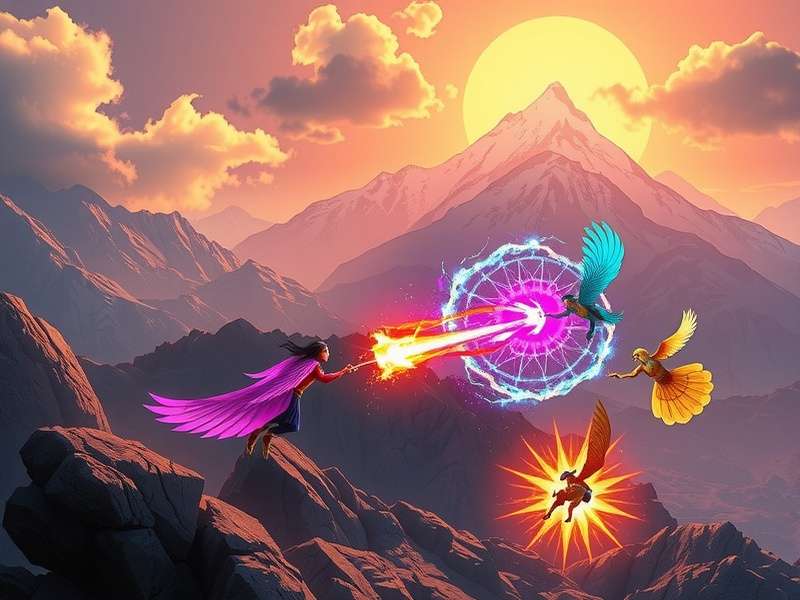
Planned future expansions for Flaming Flit will explore more regions of ancient India and mythological realms
Cross-Media and Merchandising
Daman Games has also announced plans to expand the Flaming Flit brand beyond gaming through various merchandise and cross-media projects:
- Partnership with traditional Indian artisans to create handcrafted merchandise inspired by the game
- An official art book featuring concept art and mythology insights
- A graphic novel series expanding on the game's backstory
- Collaborations with Indian fashion designers for clothing lines inspired by the game's aesthetics
- Potential theme park attractions in partnership with major Indian entertainment destinations
These initiatives reflect Daman Games' vision of Flaming Flit not just as a game, but as a cultural IP that can help promote Indian art, craft, and storytelling on the global stage.
Conclusion
Flaming Flit represents a watershed moment for Indian game development, proving that locally-made titles can achieve both critical acclaim and commercial success while celebrating Indian culture and mythology with authenticity and depth. The game's innovative elemental combat system, richly detailed open world, and nuanced storytelling have set a new standard for what Indian gamers can expect from domestic developers.
More than just a game, Flaming Flit has become a cultural phenomenon in India, sparking renewed interest in traditional knowledge systems, mythology, and martial arts among young people. It has also demonstrated the potential for Indian games to compete on the global stage, not by imitating Western models but by drawing strength from India's own rich cultural heritage.
As Daman Games continues to expand the Flaming Flit universe with new content and spin-offs, the game is poised to become one of India's most successful and enduring cultural exports, joining the ranks of globally recognized entertainment franchises while remaining proudly rooted in Indian identity.
For gamers around the world, Flaming Flit offers a fresh perspective on the fantasy RPG genre, introducing them to the richness and complexity of Indian mythology and philosophy through an engaging and innovative gameplay experience. In doing so, it has opened the door for more diverse cultural representation in gaming and helped establish India as a creative force in the global gaming industry.